With new smartphones flooding the market every year, many people struggle with which device to choose. In particular, smartphones have become tools that handle everything from daily documentation and work efficiency to hobbies, making careful decision-making essential. Rather than just looking at camera megapixels or processor numbers, it is a priority to identify how you use your phone most often.
1. Device Selection Criteria Based on Your Lifestyle

The first thing to consider is your smartphone usage pattern. If you are a creator who enjoys photos and videos, the camera sensor size, image stabilization, and editing performance are most important. On the other hand, if you mainly use your phone for work, such as checking emails and document tasks, you should prioritize screen size and multitasking features. For gamers, the heat management system and display refresh rate are the keys to selection.
Many people chase the latest specs and choose the most expensive model, but in actual usage environments, they often fail to utilize even half of that performance. Clarifying your intended use allows you to choose a satisfying device while reducing unnecessary spending. For example, if you are frequently outdoors, consider a lineup with good battery efficiency and durability; if you mainly use it at home or the office, consider a model equipped with a high-resolution display. As a checkpoint, listing the apps you use and checking their system requirements can be helpful. Also, do not skip the process of handling the device in a store, as phone weight and grip directly affect fatigue during long-term use.
An additional point to consider is the user experience (UX) of the operating system. If you are accustomed to the ecosystem of the brand you previously used, data migration and environment settings are much easier when switching devices. If you intend to switch to a new operating system, you should check the compatibility with paid apps you previously purchased or connected smart home appliances in advance. The security update support period is also an important selection criterion. You should choose a model that provides consistent software updates for at least 3 to 5 years to keep your device safe for longer.
2. Finding the Balance Between Performance and Price
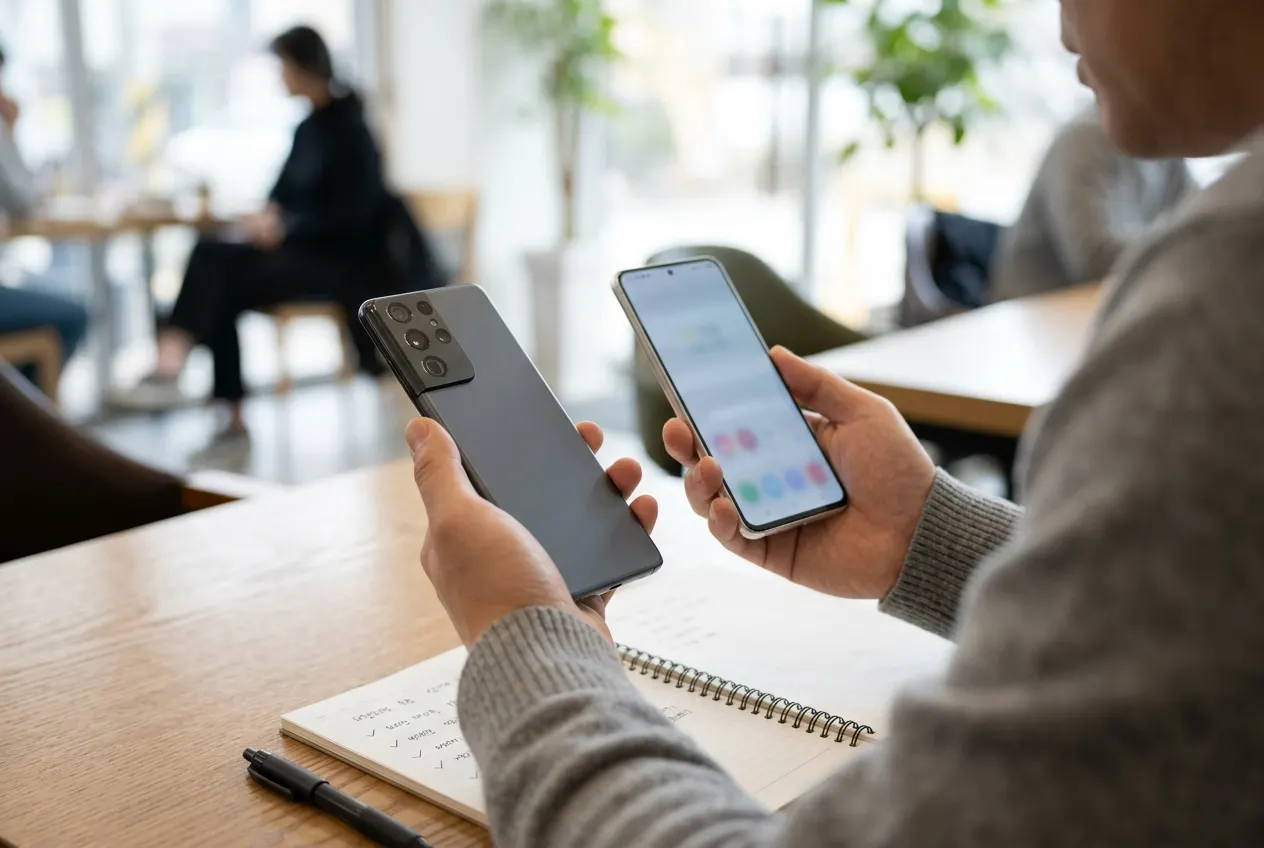
The price of the latest smartphones is rising every day. Therefore, the process of making a reasonable choice between 'value for money' and 'flagship' is essential. The table below compares key factors to consider for each general user type.
| Category | Key Considerations | Recommended User |
|---|---|---|
| Flagship | Top performance, innovative technology, brand value | Heavy users, video creators |
| Sub-premium | Core features included, reasonable price | General office workers, students |
| Entry-level | Basic communication and app execution optimization | Secondary phone, light users |
As shown in the table above, prioritize what features you need most within your budget. For example, if photos are important but you don't play games at all, a sub-premium model focused on camera performance rather than a top-tier processor might be a much better choice. It is wiser to check if the features you need are included rather than blindly insisting on the latest model. When comparing price-to-performance, older flagship models released about a year ago often offer better hardware specs than current entry-level models, so utilizing this niche strategy is also a good idea.
Also, choosing storage capacity is an important variable in price determination. If you actively use cloud services, the base capacity may be sufficient, but if you enjoy high-definition video recording or store a lot of offline content, choosing a higher capacity is advantageous in the long run. Since most models do not allow for storage expansion after purchase, it is wise to calculate your average data usage in advance and decide on an appropriate capacity.
3. Escaping the Trap of Rate Plans and Contracts

Just as important as the device price is the monthly communication fee. Signing up for an unconditional high-priced rate plan when buying the latest smartphone can lead to significant cost losses in the long run. Purchasing an unlocked (SIM-free) model and combining it with a budget carrier (MVNO) plan is a smart consumption pattern chosen by many consumers recently.
Since device price discounts end after the contract period, you should carefully calculate whether to maintain the rate plan or apply a new selective contract discount. Check your bill from the last three months to see how much carrier bundle discounts are worth and how much data you actually use. If you are using much less data than you thought, simply lowering your rate plan can save you hundreds of thousands of won. Note that when moving to a budget carrier, existing membership benefits or specific value-added services may disappear, so it is advisable to decide by comparing the value of those benefits with the cost savings.
Another factor to consider when choosing a rate plan is the difference between 5G and LTE. You should check if the device requires a 5G plan or if an LTE plan is sufficient. If you are a user with low data usage, there is no reason to insist on an expensive 5G plan. You should also check if 5G signals are stable in your residence or workplace. Since the quality of wireless data networks directly affects daily streaming service usage, referring to communication quality maps is also a good method.
4. Trade-in and Existing Device Disposal Strategy
How to handle your existing device when buying a new one is also a concern. Recently, manufacturers and retailers have been actively operating trade-in programs. However, since compensation amounts fluctuate depending on market conditions, it is necessary to compare them with the market prices on second-hand trading sites.
If direct second-hand trading is cumbersome, using the manufacturer's official trade-in program is safe and convenient. On the other hand, if you want to get a higher amount, it is good to keep the device in clean condition, keep the box and components, and use a personal trading platform. At this time, be careful to completely delete data and perform a factory reset so that personal information does not remain. Before disposing of the device, be sure to back up your data and check that you have removed the SIM card and memory card. Also, be careful because if you do not log out of your account completely, device lock issues may occur for the next user.
When disposing of a used device, fine scratches on the screen or battery efficiency also affect the price. If you have managed the exterior of the device well by using cases or protective films, you can get a good price. If the battery performance has dropped significantly, replacing the battery at an official center before selling it may help maintain the overall price. However, it is essential to calculate in advance whether it is economical by comparing the replacement cost with the difference in second-hand market prices. Also, when trading, direct transactions are most effective for preventing fraud and disputes by allowing the buyer to check the device condition in person.
5. Final Checklist Before Purchase
Once you have checked all the information, finally double-check the following items. First, is there enough OS update support period left for the device? Second, is it compatible with the apps I mainly use? Third, is it a brand with accessible service centers? Fourth, are there any fatal defects unique to the device?
If you can answer these questions yourself, you can decide to purchase. The latest smartphone is not just a consumer good but a partner that is with you every day. Careful comparison and a choice tailored to your situation will bring the most satisfying results. Rather than being swept away by trends, set your own standards and choose a device that meets them. Finally, immediately after receiving the device, it is essential to test for exterior scratches, dead pixels on the display, and ensure that major functions such as communication, Wi-Fi, and the camera are working properly.
Checking for initial defects after receiving the product is very important. For a few days after purchase, you should carefully observe whether there is any overheating or rapid battery drain. In particular, manufacturing defects such as dust inside the camera lens or poor color uniformity on the display should be reported for exchange immediately upon discovery. Also, do not forget to check the unique device number (IMEI) through the device settings menu and register for the free warranty period on the official website. These small actions form the foundation for using your new smartphone satisfactorily for a longer time.
Frequently Asked Questions
What is an unlocked (SIM-free) smartphone?
It refers to a method of purchasing only the device from a manufacturer or open market without going through a carrier. It has the advantage of being able to freely choose the desired carrier or budget phone plan without a contract.
Which is more advantageous when buying the latest smartphone: unlocked or carrier contract?
If you have high data usage and receive family bundle discounts, a carrier contract may be advantageous. On the other hand, if you prefer a low rate plan and dislike being tied to a contract, a combination of an unlocked purchase and a budget carrier is economical.
How do I migrate data when changing phones?
Recently, you can easily transfer photos, contacts, and app data wirelessly using data migration apps provided by manufacturers. Using cloud backup features makes it even safer.
Are entry-level models good enough in performance?
Recently, the performance of entry-level models has been standardized to a level where there is no problem at all with general web surfing, video watching, and SNS usage. If you don't enjoy high-spec games, it will be a satisfying choice.