1. What is a Family Relation Certificate?

A Family Relation Certificate is an official document that records the personal details of your parents, spouse, and children based on yourself. While a Resident Registration Certificate is based on your place of residence, the Family Relation Certificate is a key document proving blood and marital relationships. Therefore, unlike cases where simple address verification is needed, it is mandatory for situations involving inheritance, visa issuance, or proving family relationships.
Recently, it has been divided into 'General' and 'Detailed' certificates. A General Certificate shows only your current spouse and children, while a Detailed Certificate can include past divorces or deceased family members. Since the required format may vary depending on the purpose, it is recommended to check with the receiving agency in advance. You can also utilize the 'Specific Certificate' system to issue information for only certain family members for specific purposes. For example, a General Certificate is often sufficient for school submissions, but a Detailed Certificate containing all information is essential for inheritance or property-related matters.
2. The Most Recommended Online Issuance Method
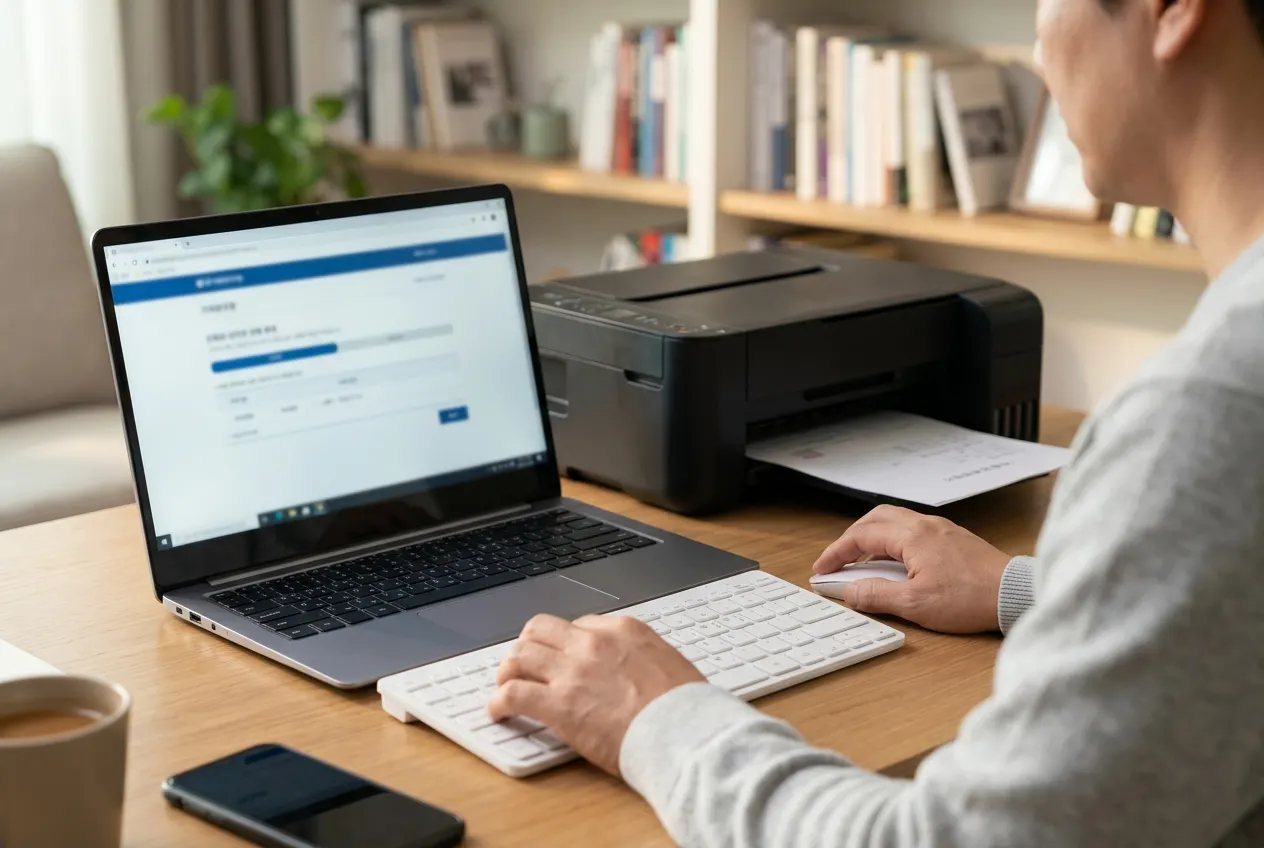
The fastest and easiest way is to use the 'Supreme Court Electronic Family Relation Registration System' website. The biggest advantage is that it is available 24/7 and is free of charge. If you have a PC and a printer, you can print it directly from home.
The requirements are simple. You only need one of the following: a joint certificate (formerly public key certificate), a financial certificate, or simple authentication (Kakao, Naver, PASS, etc.) under your name. After accessing the site and completing the identity verification process, you can select the type of certificate, the number of copies, and whether to disclose your resident registration number, and then immediately save it as a PDF or print it. When issuing online, you may need to install security programs depending on your browser environment, so it is recommended to use the latest version of Chrome or Edge. If you do not have a printer, you can save it as a PDF file to print later or check if the receiving agency accepts file transfers via email.
3. Using Unmanned Civil Application Kiosks

If you do not have a printer at home or find it difficult to use digital certificates, try using an unmanned civil application kiosk installed at nearby subway stations, large supermarkets, or community centers. Issuance is possible using only your resident registration number and fingerprint recognition, and in most cases, the fees are low or free. You can receive the certificate without complicated procedures just by standing in front of the machine and touching the screen according to the voice prompts.
Note that not all kiosks operate 24/7. Before visiting, be sure to check the location and operating hours via the 'Unmanned Civil Application Kiosk Guide' on the 'Government24' website. In particular, machines inside government offices may be inaccessible outside of working hours, so it is more efficient to look for machines in subway stations that operate 24 hours. Also, since fingerprint recognition is based on the fingerprint registered on your Resident Registration Card, please be aware that if your fingerprints are worn or difficult to recognize, the use of the kiosk may be restricted.
4. Visiting a Community Center
If you are not comfortable using online services or kiosks, the most reliable method is to visit a community center in person. You can receive the certificate immediately through a clerk by presenting your ID. However, there is a limitation that it is only available during weekday working hours, and a small fee may be charged.
If a family member is issuing it on your behalf, a power of attorney and the proxy's ID are mandatory. Even for immediate family members, required documents may vary depending on the situation, so it is most accurate to call the community center in advance to inquire about the necessary documents. When issuing via a proxy, a copy of the principal's ID is essential, so prepare it in advance to avoid wasted trips. Also, since there may be a long wait, utilizing morning hours is a way to increase time efficiency.
5. Common Mistakes and Checklist
A common mistake many people make is regarding the 'disclosure of the resident registration number'. Unless specifically requested by the receiving agency, it is recommended to mask the last digits of your resident registration number for personal information protection. However, for submissions to banks or government offices, a Detailed Certificate with all digits disclosed is often required, so check the instructions from the receiving agency in advance. To avoid the hassle of having to reissue the document because you masked the digits, it is important to make a habit of noting down the requirements of the receiving agency.
Also, many people panic when they proceed without checking the printer connection and find they cannot print. For online issuance, we recommend performing a test print first or using the PDF save function to keep the file safe. Since document forgery prevention programs must be installed, it is better to proceed on a personal PC rather than a company security computer. Also, since some printers may not be supported, ensure that a physical printer is connected rather than a virtual printer setting. Occasionally, network printers may not be supported due to security settings, so using a local printer connected via USB is the most reliable method.
6. Precautions and Security Management
As this is a document with legal effect, be careful not to share the issued certificate with others carelessly. In particular, even if files saved online are encrypted, they contain personal information, so you should make a habit of deleting them safely after your work is done. Since these are official documents, the content may change depending on the time of issuance. Be sure to check the validity period, such as 'issued within the last 3 months', as required by the receiving agency.
Digital security also requires caution. You should avoid using public Wi-Fi to issue certificates and it is safest to proceed in a secured home network environment. Also, storing issued files on cloud servers or public PCs carries a high risk of personal information leakage, so it is best to keep them on a personal storage medium and delete them immediately when no longer needed. If you must print in an internet cafe or public space, it is essential to delete the browser cache and history after the task and reboot the computer completely to ensure no traces are left behind.
Issuing a Family Relation Certificate is a very basic administrative service in modern society. Although it may seem complicated at first, once you do it yourself, it becomes a simple task that you can finish in a few minutes next time. We hope you utilize the online systems and offline counters introduced today to handle your tasks smoothly. Please choose the issuance path that suits your situation to prepare your documents efficiently. We recommend moving past the confusion of document preparation and experiencing smarter administrative processing by choosing the optimal issuance method for your situation.
Frequently Asked Questions
Where can I get a Family Relation Certificate?
You can get it through the Supreme Court Electronic Family Relation Registration System website (online), by visiting a community center, or via an unmanned civil application kiosk.
Is there a fee for online issuance?
No, online issuance through the Supreme Court Electronic Family Relation Registration System is free of charge.
Can I issue a certificate for a family member?
Yes, certificates for immediate family members such as parents, spouses, and children can be issued online after verifying your own identity.
Are the last digits of the resident registration number necessary?
It depends on the receiving agency. For submissions to financial institutions or government offices, a Detailed Certificate with all digits disclosed is often required, so please check in advance.
How do I find the location of an unmanned civil application kiosk?
You can search for locations and operating hours near your residence in the 'Unmanned Civil Application Kiosk Guide' menu on the Government24 website.