When spending the summer with your pets, the first thing you worry about is the 'heat.' This is because dogs and cats do not have well-developed sweat glands like humans, making it difficult for them to regulate their body temperature. So, what is the safest way to manage this for our furry friends? To put it simply, the keys are managing the indoor environment, providing sufficient hydration, and scheduling walks carefully. Summer is a physically demanding time for pets, so careful observation and preventive measures by the owner are essential.
Maintaining Optimal Indoor Temperature and Humidity

The most comfortable indoor temperature for pets is generally known to be between 24 and 26 degrees Celsius. However, this may vary depending on the breed, age, and health condition. If the indoor temperature is too high in the summer, pets are at risk of heatstroke. When using air conditioning, be careful not to let the cold air blow directly on your pet, and it is recommended to ventilate periodically to prevent air-conditioning sickness.
Humidity is also a factor that cannot be ignored. High humidity increases the perceived temperature, making pets feel more uncomfortable. Use a dehumidifier or the dehumidification function of your air conditioner to keep humidity at a 50-60% level. Also, placing a marble mat or a cooling mat so that your pet can find a cool spot on their own is a good method.
A point to check when creating an indoor environment is air circulation. Use a circulator to ensure air circulates throughout the room so that the air conditioner's breeze does not stay in one specific area. It is also important to check the temperature of the space where your pet mainly stays frequently and to maintain the temperature settings even when you are out so that your pet does not feel the heat. In particular, senior dogs or those with heart conditions are vulnerable to rapid temperature changes, so they require even more careful management. Observing your pet's behavioral changes when managing the indoor environment is also an important checkpoint. If they lie down on the floor more often than usual or their breathing becomes shallow, you should lower the indoor temperature slightly or move them to a well-ventilated area.
Proper Hydration and Nutritional Management

In hot weather, moisture loss is faster than usual. It is recommended to place water bowls throughout the house so that they can always drink plenty of clean, fresh water. If your pet does not drink water well, you can naturally increase their intake by floating one or two ice cubes in the water or mixing in wet food.
You should also pay attention to food management as feed can easily spoil in the summer. Feed only small amounts at a time, and store the remaining food in a cool, dry place. In particular, consume canned food quickly after opening, and remove uneaten food immediately to maintain a hygienic environment.
Using pet-specific drinks or vegetables is also a good way to help with hydration. Feeding appropriate amounts of vegetables with high water content, such as cucumbers or watermelon, can provide hydration as well as vitamins. However, excessive feeding can cause indigestion, so you should feed small amounts according to your pet's constitution. Also, cleaning water bowls daily to prevent slime buildup is key to preventing bacterial growth. For hydration, placing multiple water bowls in locations that are easily accessible to your pet is a more practical method than simply increasing the amount.
Time Slots and Precautions for Safe Walks
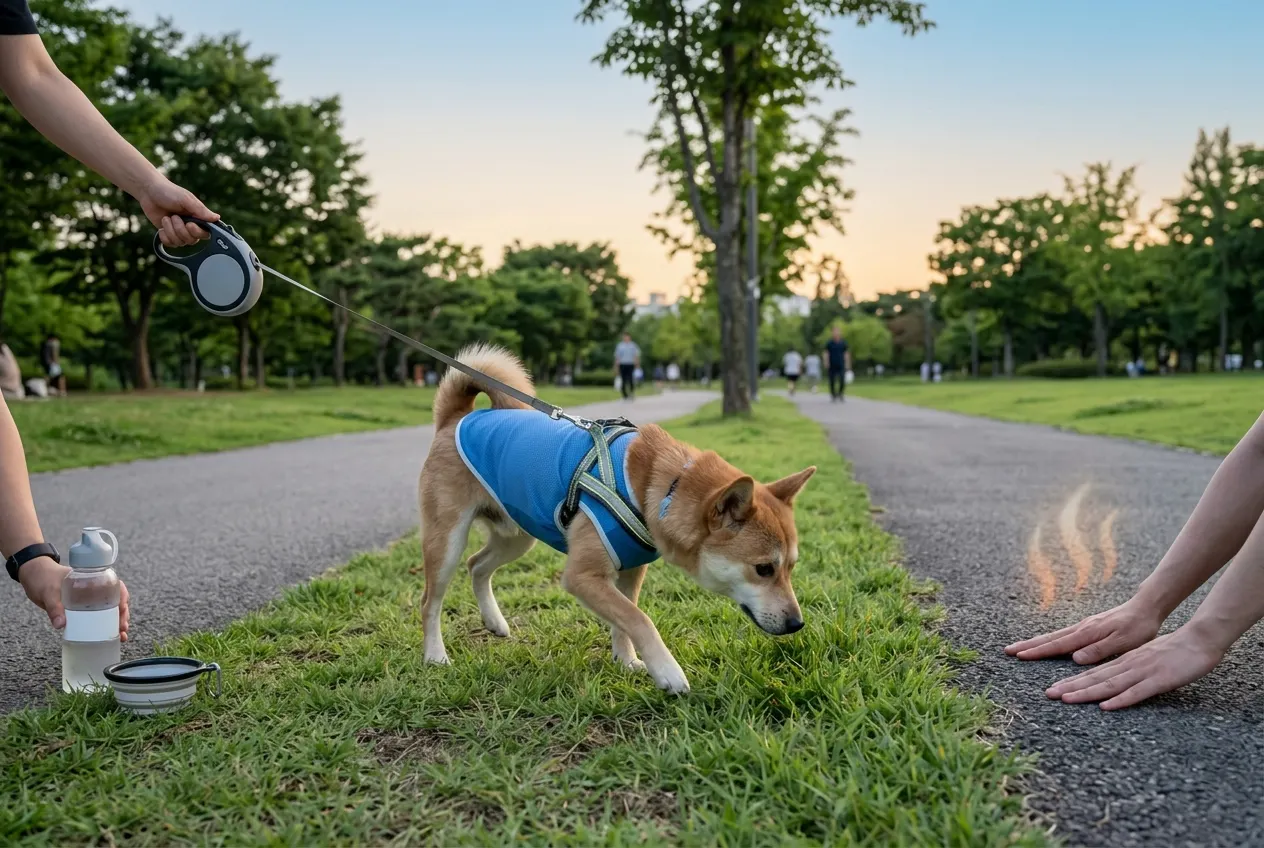
Asphalt during the daytime in summer is very hot. A pet's paw pads are much more delicate than human skin, so there is a high risk of burns. Therefore, it is advisable to avoid walks between noon and 5 PM when the sun is hot, and instead utilize the time after sunset or early in the morning.
Before walking, check the ground temperature with the back of your hand. If it feels too hot when you place the back of your hand on the ground for about 5 seconds, it is a dangerous temperature for your pet. Also, using light clothing or a cooling scarf during walks is good for preventing body temperature rise.
During walks, you must continuously check your pet's condition. If they stick their tongue out excessively or pant more frequently than usual, stop the walk immediately and take a rest in the shade. Always carry a portable water bottle to provide hydration frequently, and it is better to set walking routes on grass where the ground is not hot. If going out during the day is unavoidable, take measures to lower the temperature by wrapping an ice pack in a towel and placing it inside the carrier. During walks, the owner should check the pet's paw pads frequently, and removing foreign objects stuck between the pads immediately after the walk is safe.
Heatstroke Symptoms and Emergency Response
If your pet is panting, drooling excessively, staggering, or vomiting, you should immediately suspect heatstroke. Heatstroke is a very dangerous emergency, so if symptoms appear, move them to a cool place immediately and wet their body with lukewarm water to gradually lower their body temperature. A point to note here is that using water that is too cold or sudden cold water baths can actually cause shock. After first aid, you must visit an animal hospital and receive a check-up from a veterinarian.
Discovering early symptoms of heatstroke is key to increasing survival rates. If activity levels drop sharply, eyes become bloodshot, or gum color turns redder than usual, immediate action is required. During first aid, keep the pet's head slightly lower than the body to help blood circulation, and wetting the paw pads or around the armpits with lukewarm water is effective for dissipating heat. Even while moving to the hospital, keep the vehicle temperature low to prevent further body temperature rise. It is a good idea to know the contact information of your regular animal hospital and the location of places that provide emergency night care in advance.
Summer Fur Care and Hygiene
Fur plays a role in protecting a pet's skin, but in summer, fur can make them feel the heat more severely. However, shaving the fur short indiscriminately can increase the risk of skin burns or UV exposure. Brushing frequently to remove dead fur helps with air circulation, which aids in body temperature regulation.
Fungal skin diseases or external parasite infections also occur frequently in the summer. After walks, check if there are any foreign objects between the paw pads and dry them thoroughly to prevent eczema. Rather than regular grooming, careful brushing and hygiene management are the keys to pet health in the summer. Get into the habit of cleaning between the toes and drying them completely using the cool air setting of a hair dryer. If fur gets tangled, it can prevent proper ventilation and cause skin diseases, so it is recommended to check the skin condition through daily brushing. Brushing helps blood circulation in the skin and removes dead fur, facilitating heat dissipation, so it is recommended to set a specific time for brushing every day.
A pet's summer starts with the owner's careful observation. Please check every day to see if they are showing any behavior different from usual, or if there are any changes in appetite or activity levels. Small amounts of attention add up to help your pet have a healthy and cool summer. You can have a safe summer just by changing the environment and practicing preventive rules.
Frequently Asked Questions
What temperature should I set the air conditioner to for my pet?
Generally, 24-26 degrees Celsius is appropriate. However, adjust the direction of the air conditioner so that the pet does not get hit by cold air directly, and be careful as temperatures that are too low can cause air-conditioning sickness.
What precautions should I take when walking in the summer?
Hot asphalt during the day can cause burns on your pet's paw pads. It is better to use the early morning or evening hours after sunset, and it is good to get into the habit of checking the ground temperature with the back of your hand.
What should I do if I suspect heatstroke?
Move them to a cool place immediately and wet their body with lukewarm water to gradually lower their body temperature. Avoid cold ice water as it carries a risk of shock, and if the condition does not stabilize, move to an animal hospital immediately.
Does shaving the fur short help with the heat?
Fur plays a role in protecting the skin from UV rays. Rather than shaving it short unconditionally, brushing frequently to remove dead fur and allowing for good ventilation is more effective for skin health and body temperature regulation.